






















Choose an idea before a list of surfaces
A backdrop, a floor treatment and a display can each look attractive while telling different stories. Begin with the atmosphere and the action the space should support. Is this a portrait set, a welcome point, a product reveal or a place to play? Share the campaign references and venue context together. That gives custom fabrication and print production a coherent direction instead of a collection of unrelated branded objects.
Design from the camera's point of view
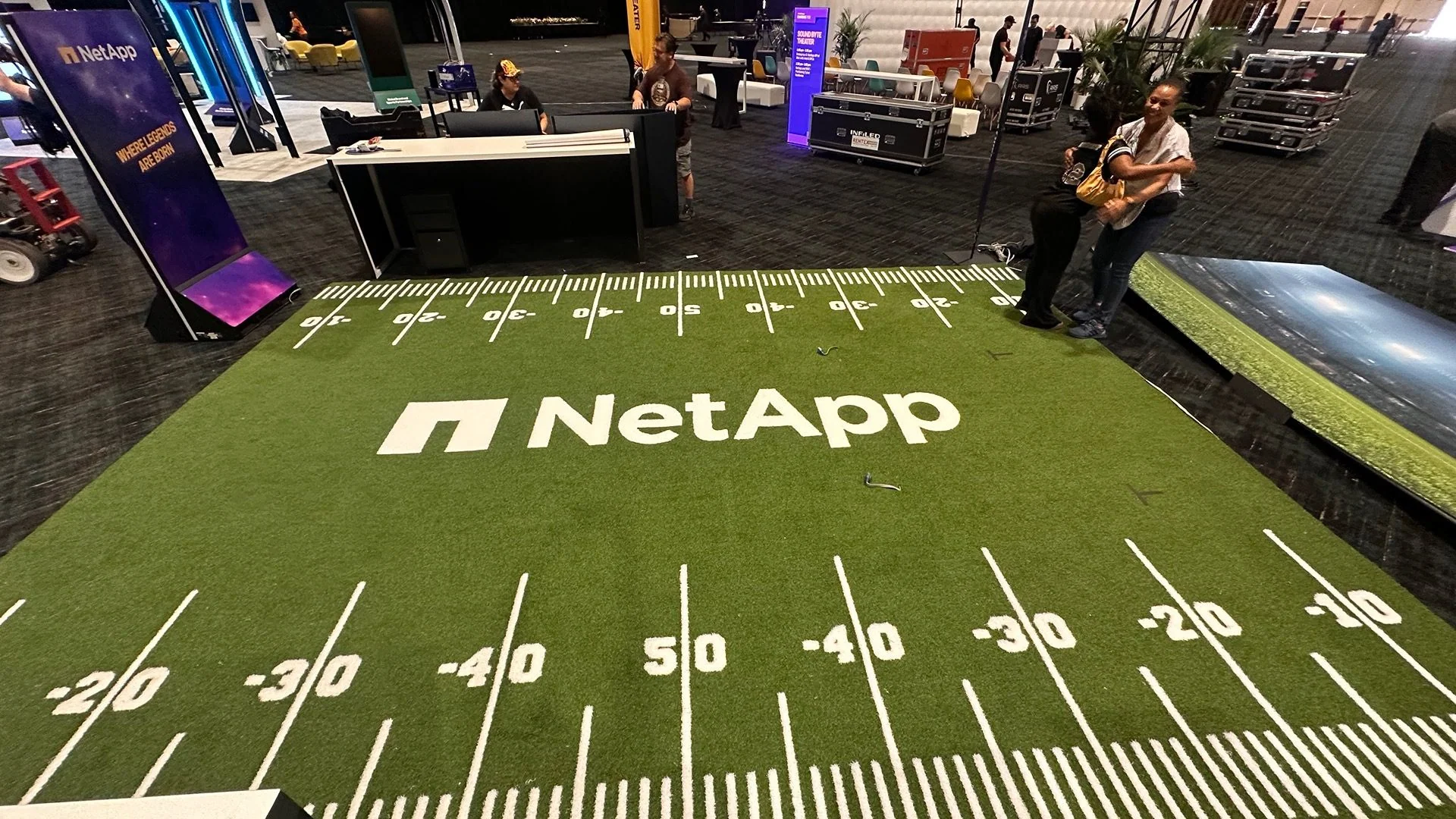
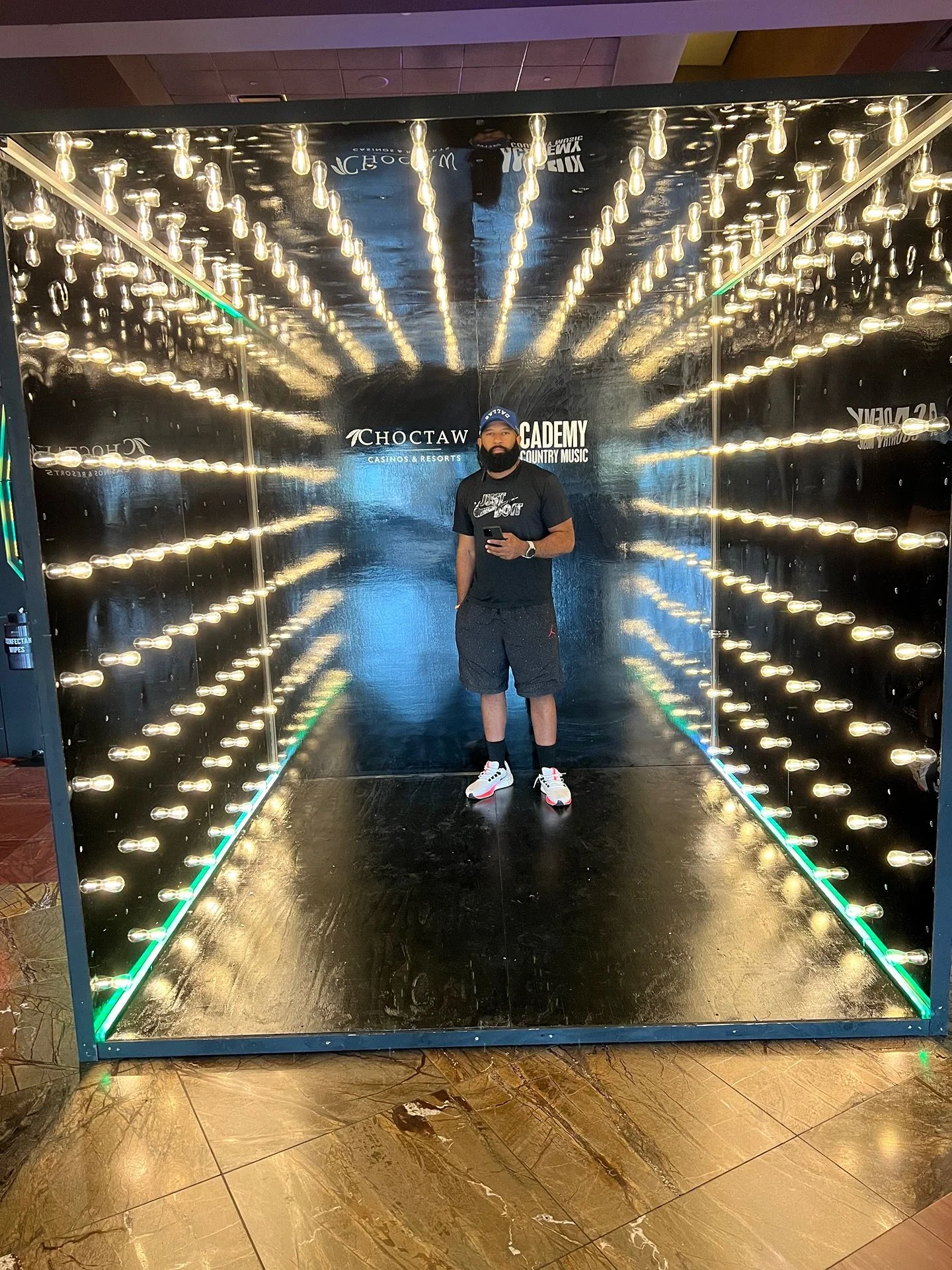
An event environment has two audiences: people in the room and people who see its content afterward. Check how the set looks from the intended capture position. Typography near an edge may disappear in a crop; reflective materials can behave differently under capture lighting. Review branded turf, fabric backdrops and scenic elements together with the camera plan. The finished image should look intentional without requiring every guest to stand in one awkward position.
Use light to guide attention
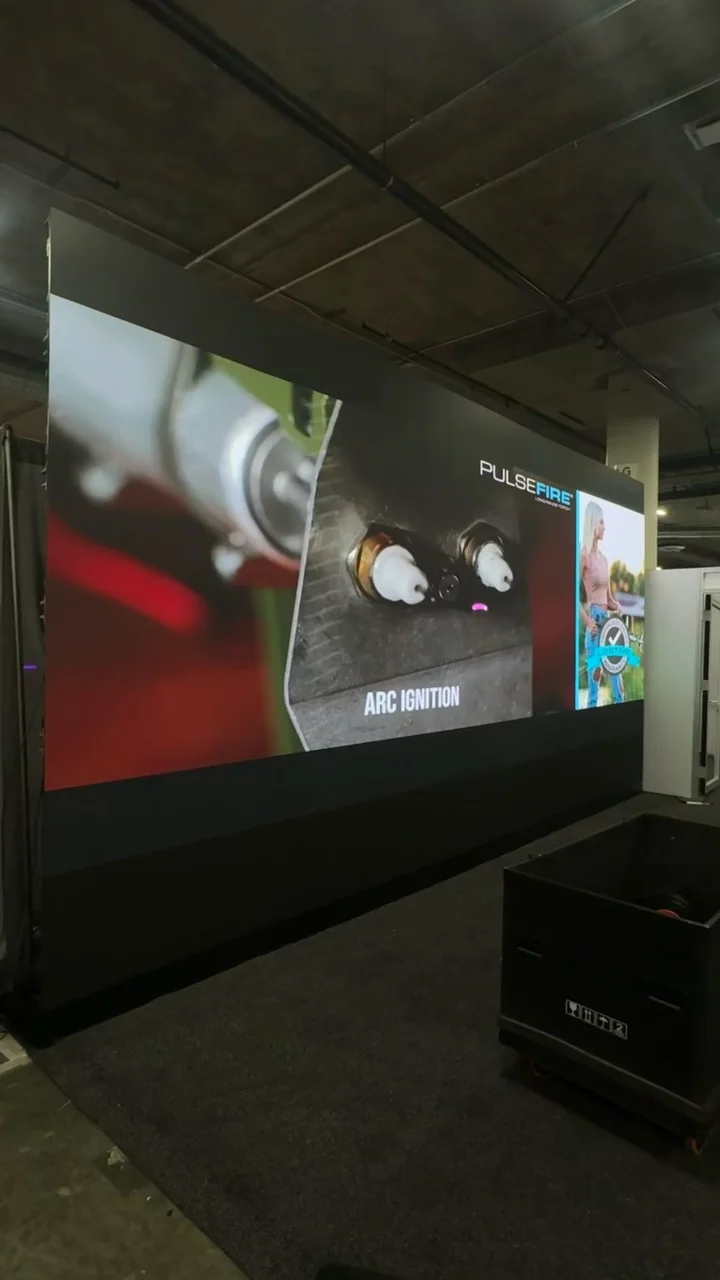
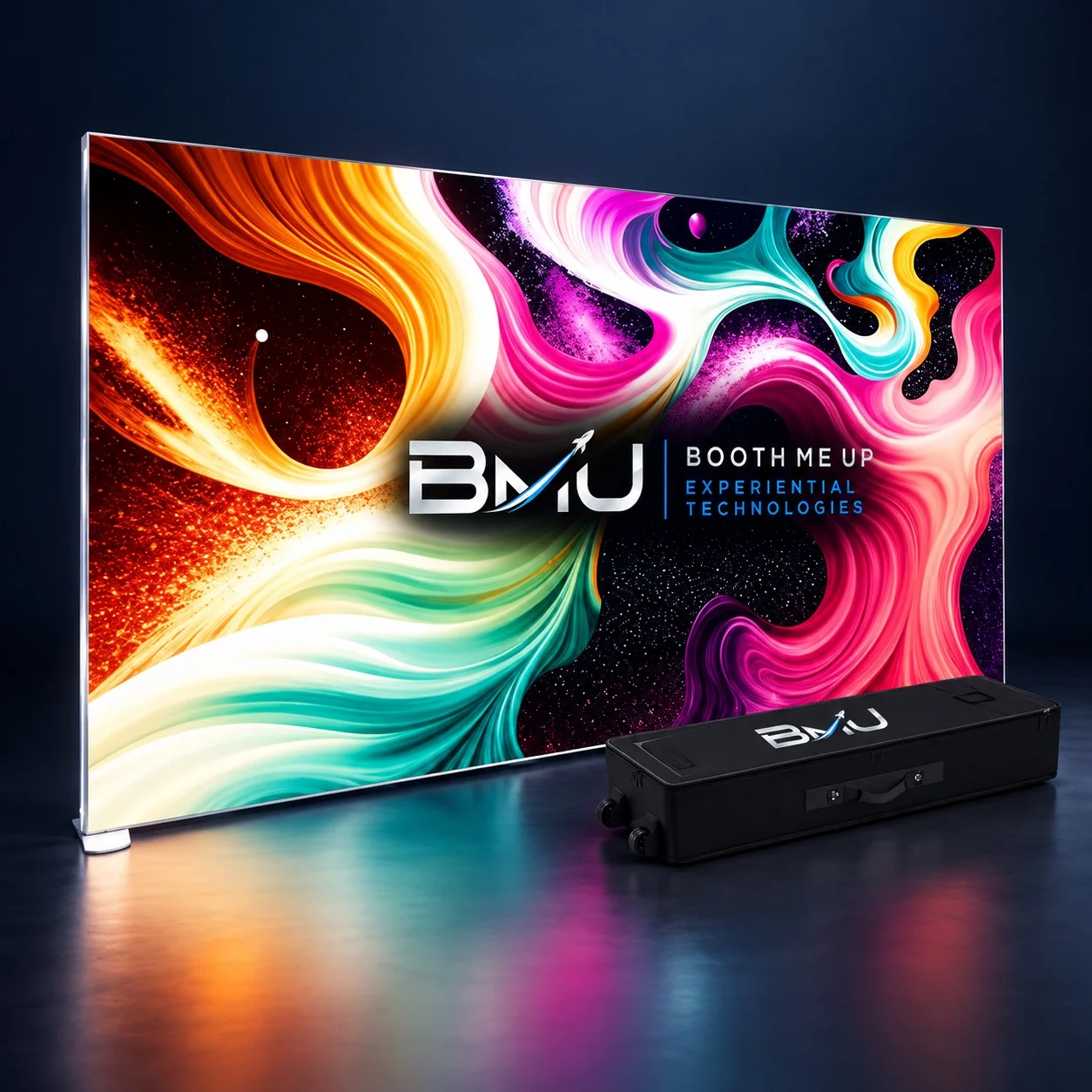
SEG Backlit Trade Show Display and LED Video Walls offer different ways to make content visible. A backlit graphic can provide a clear fixed message; a video wall can support changing visual content. Choose the role before specifying the surface. Prepare artwork for the agreed dimensions and review its contrast at realistic viewing distances. Moving imagery should support the live experience rather than competing with the guest or the presenter.
Make practical details part of the design
Materials, access, assembly, venue restrictions and cable paths influence what can be built. Custom fabrication needs a production conversation about the approved footprint and load-in route. Fabric graphics need accurate artwork and an agreed installation plan. Share deadlines and approval responsibilities early. A beautiful rendering is a creative tool; final construction and venue suitability still depend on the agreed engineering and production requirements.
Connect the printed world to the digital one
The same campaign can appear in the room, on a guest output and in a digital interface without repeating identical artwork everywhere. Set a visual hierarchy: the invitation, the interaction and the takeaway each need their own emphasis. BoothMeUp's Print Shop and Fabric Backdrops pages give the graphics conversation a starting point. Bring the experiential brief too, so printing, scenic design and capture work toward the same guest moment.
Questions worth asking
Should backdrop artwork be designed before the photo setup?
Design them together. The capture position, lighting and finished crop affect which parts of the backdrop guests and viewers will see.